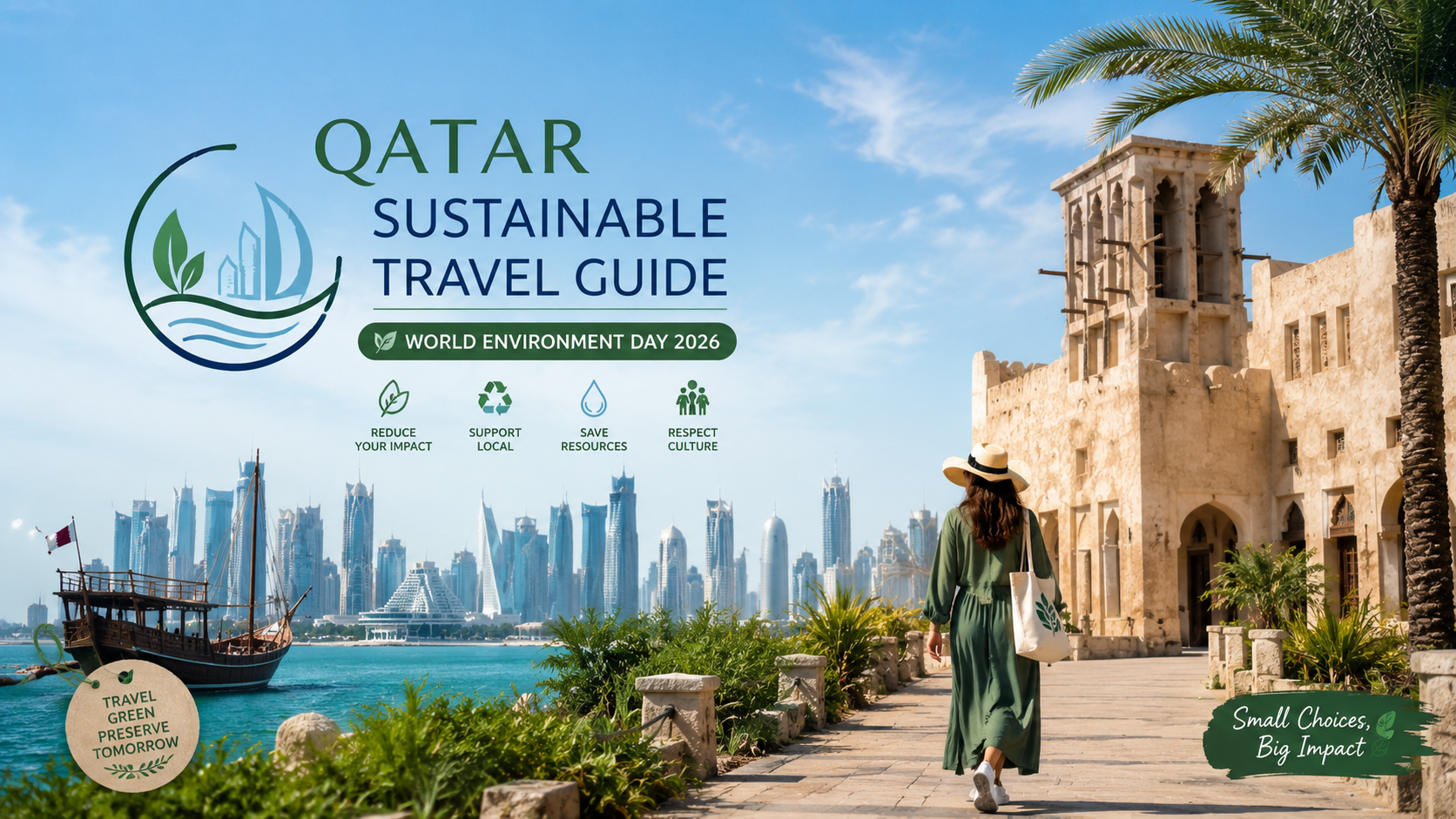
Qatar is emerging as a leading destination for environmentally responsible tourism. World Environment Day celebrations highlighted the country’s sustainable tourism initiatives. Visit Qatar showcased the Qatar sustainable travel guide nationwide today.
The nation’s tourism development aligns with Qatar National Vision 2030. Environmental responsibility remains central to hospitality and infrastructure planning. Sustainable practices now shape how visitors experience the country as a whole.
Tourism operators effectively balance modern development with nature-preservation strategies. Both residents and tourists can explore eco-conscious destinations throughout Qatar. These landmarks represent a genuine commitment to long-term environmental protection goals.
Msheireb Downtown Doha: Smart City Innovation
Msheireb Downtown Doha blends heritage with cutting-edge sustainable urban design principles. It ranks as the world’s first fully built smart sustainable district. Energy-efficient buildings significantly reduce energy consumption throughout the development area.
Water conservation systems operate across all commercial and residential spaces. A fully electric tram network connects the downtown district seamlessly. Located near Souq Waqif, Corniche, and museums for tourist convenience.
Restaurants, hotels, and cultural attractions create vibrant community experiences here. The district proves that sustainability and modernity coexist harmoniously in practice. Visitors enjoy authentic Qatari culture within an environmentally conscious urban setting.
Lusail City: Sustainable Urban Living at Scale
Lusail City represents one of Qatar’s largest planned urban communities. Residential areas, hotels, offices, and retail are integrated within eco-design principles. The city incorporates district cooling systems, dramatically reducing energy consumption.
Water conservation technology operates throughout all public and private spaces. Green spaces and pedestrian pathways encourage active, sustainable transportation methods. Cycling routes connect major destinations, reducing overall reliance on vehicles.
Place Vendôme, Lusail Marina Promenade, and Maha Island attract millions annually. Winter Wonderland Qatar offers family entertainment within sustainably designed environments. The city demonstrates the possibilities for large-scale sustainable development for modern nations.
Doha Metro: Transportation for a Sustainable Future
The Doha Metro revolutionized how residents and tourists explore Qatar. Fast, efficient transit connects cultural, commercial, and sporting attractions seamlessly. The system provides environmentally conscious alternatives to personal vehicle travel.
Zero-emission transportation reduces Qatar’s sustainable travel carbon footprint significantly each year. Metro stations feature a modern design with accessibility for all passengers. Commuting times have decreased dramatically since the system’s comprehensive network opened.
Green Spaces: Recreation Meeting Environmental Responsibility
Qatar’s public parks create essential recreational spaces for entire communities. Al Bidda Park, Oxygen Park, Katar Hills, and Aspire Park thrive. Lusail’s extensive parks offer accessible outdoor experiences year-round for everyone.
These green spaces support biodiversity and encourage active, healthy lifestyles. Community engagement programs connect residents with nature preservation initiatives. Parks provide cooling effects, reducing urban temperatures during hot seasons.
Families enjoy picnicking, sports, and relaxation within natural environments here. Environmental education occurs organically through park visits and activities offered. The spaces perfectly balance urban development with the preservation of ecological health.
FIFA World Cup 2022 Stadiums: Sustainability at Scale
All World Cup stadiums earned Global Sustainability Assessment System certification globally. Stadium 974 made history as the first fully demountable shipping container venue. The design allows for future dismantling and relocation, significantly reducing waste.
Education City Stadium achieved five-star efficiency ratings for exceptional performance. Al Bayt Stadium’s design dramatically reduced overall cooling energy requirements. Lusail Stadium used advanced roofing technology to optimize energy consumption.
These venues set unprecedented global standards for sporting event sustainability. The infrastructure demonstrates that major events and ecology coexist successfully. Future sporting events now have clear global sustainability benchmarks to follow.
Qatar Sustainable Travel Destinations in 2026
| Policy/Initiative | Vision/Strategy | Sustainability Goals | Tourism Impact | Timeline |
|---|---|---|---|---|
| Qatar National Vision 2030 | Long-term development framework | Balanced economic, social, environmental growth | Sustainable tourism development | Through 2030 |
| National Tourism Strategy 2030 | Tourism sector growth plan | Eco-friendly hospitality and infrastructure | Responsible tourism experiences | Through 2030 |
| FIFA World Cup 2022 Legacy | Post-event sustainability | Global standards for sporting events | Green infrastructure showcase | 2022+ ongoing |
| Urban Development Projects | City modernization | Green spaces, efficient transport, smart cities | Diverse tourism destinations | Ongoing |
| Public Transportation System | Mobility solutions | Zero-emission commuting options | Accessible city exploration | Operational |
| Green Space Expansion | Environmental restoration | Biodiversity support, recreation | Nature-based tourism | Continuous |
Visit Qatar Sustainability Travel Commitment Moving Forward
Visit Qatar actively develops and promotes environmentally conscious tourism experiences nationwide. Initiatives align with the strategic development priorities of Qatar National Vision 2030. The tourism authority consistently encourages conscious travel among international visitors.
Sustainable destinations showcase authentic Qatari culture alongside environmental responsibility. Diverse experiences appeal to visitors seeking responsible tourism alternatives globally. Qatar positions itself as a premium eco-conscious destination internationally.
Environmental innovation continues to shape the development and growth of Qatar’s tourism sector. Infrastructure investments prioritize sustainability alongside economic development objectives equally. The nation demonstrates that luxury tourism and ecology complement each other.
Strategic Alignment Table: Qatar Sustainability Travel Framework
| Destination | Location/District | Key Sustainability Features | Visitor Experience | Best For |
|---|---|---|---|---|
| Msheireb Downtown Doha | Heart of Doha | Energy-efficient buildings, water conservation, electric tram network | Heritage + innovation blend | Cultural tourism, shopping, dining |
| Lusail City | Northern Doha | District cooling, green spaces, cycling routes, pedestrian pathways | Modern urban exploration | Families, leisure, entertainment |
| Doha Metro | City-wide network | Zero-emission transport, efficient connectivity, modern stations | Quick city exploration | All visitors, commuters, sightseers |
| Al Bidda Park | Corniche area | Green space, biodiversity support, recreation facilities | Outdoor relaxation | Families, joggers, nature lovers |
| Oxygen Park | Marina district | Environmental restoration, recreational spaces | Peaceful nature experience | Walkers, families, photographers |
| Katar Hills | West Bay | Natural landscape preservation, hiking trails | Outdoor adventure | Hikers, nature enthusiasts |
| Aspire Park | Aspire Zone | Large green space, sports facilities, landscaping | Active recreation | Sports enthusiasts, families |
| Lusail Public Parks | Lusail City | Integrated green design, community spaces | Urban green living | Residents, families, tourists |
| Stadium 974 | Doha Port | First demountable shipping container stadium | Architectural marvel | Sports fans, architecture lovers |
| Education City Stadium | Education City | Five-star efficiency rating, innovative design | World-class facility | Sports enthusiasts, students |
| Al Bayt Stadium | Al Khor | Advanced cooling technology | Iconic venue | Football fans, tourists |
| Lusail Stadium | Lusail | Advanced roof design, energy optimization | Premier experience | Sports fans, event attendees |